News Articles

VIDEO: First Head-to-head comparison of FDA-approved DMTs using four imaging modalities is explained by Robert Zivadinov, MD, PhD
The first head-to-head comparison using microglia imaging of two FDA-approved disease-modifying treatments (DMTs) for multiple sclerosis is underway. Watch Center Director Robert Zivadinov, MD, PhD explain a study underway at the Buffalo Neuroimaging Analysis Center (BNAC) on NeurologyLive®.
Robert Zivadinov, MD PhD, Looks at Brain Atrophy in MS on a Sanofi Genzyme Podcast
Brain atrophy is one of the most destructive consequences of Multiple Sclerosis. In this recent episode of the “The MS Podcast” presented by Sanofi Genzyme, BNAC Center Director Robert Zivadinov, MD, PhD, takes a closer look at brain atrophy and other brain measures in explaining physical disability with MS.

Robert Zivadinov, MD, PhD, Discusses DeepGRAI Registry Study at 2022 AAN
In an interview by NeurologyLive® from the American Academy of Neurology Annual Meeting, BNAC Center Director Robert Zivadinov, MD, PhD, explains the significance of the DeepGRAI registry study. The study applied an Artificial Intelligence algorithm developed by BNAC’s Michael Dwyer, Ph.D., to analyze routine, clinical MRI (T2FLAIR) scans taken in 30-35 different centers of approximately 1,000 people with MS. The use of AI on widely-available MRI scans reliably measured thalamic volume—an established marker for disease progression including disability and declining cognition in people with MS.
In the interview, now available on NeurologyLive®, Zivadinov notes that, “This is important because… it is now possible to have this done on every clinical patient. It clearly gives providers a tool to better measure what's happening from a gray matter point of view.”
The AI tool is named DeepGRAI—Deep Gray Rating via Artificial Intelligence—for its use of imperfect information to generate reliable measurements, is now available to clinicians.
Understanding MS Research Endpoints Helps Providers and Payers Improve Outcomes Using DMTs
BNAC Director Robert Zivadinov, MD, PhD, is lead author of “Population Health Guide to the Evolution of Endpoints in Multiple Sclerosis.” The AJMC-published whitepaper, sponsored by Janssen Pharmaceuticals, addresses the challenge to formulary and clinical decision makers in comparing the efficacy of disease-modifying therapies (DMTs) for people with Multiple Sclerosis.
Zivadinov, along with Michael J. Fine, MD, Krishna R. Patel, PharmD, RPh, and Neil Minkoff, MD, have provided a framework for providers and payers to better understand the methodologies employed in clinical trials on the increasing number of MS DMTs.
Robert Zivadinov, MD PhD, Discusses What MRI Tells Us About EBV in MS on a Sanofi Genzyme Podcast
The Epstein-Barr virus (EBV) is a member of the herpes virus family and one of the most common human viruses found all over the world. In this recent episode of the “The MS Podcast” presented by Sanofi Genzyme, BNAC Center Director Robert Zivadinov, MD, PhD, takes a closer look at the role of EBV in MS and its association with brain MRI images.
2021 BNAC Newsletter
Thank you for taking an interest in the patient-centered research, the scientists, the core laboratory services, and the mission of the Buffalo Neuroimaging Analysis Center. It’s a pleasure to share highlights from 2021 and invite you to stay in touch with our progress on the developments that matter most to you. We hope you find this 2021 Newsletter informative and welcome your comments and suggestions.
BNAC Study and Novel Software Show Uncommon Insight About MS Progression from Common MRI Scans
There is no commonly-available way for clinical neurologists to use an “everyday” MRI to provide their multiple sclerosis (MS) patients with meaningful news about their disease progression, including brain tissue changes associated with physical and cognitive impairment. The reason? Conventional MRI methods in the vast majority of clinical settings are inadequate in creating scans that can be used to measure two of the most reliable known “markers” of MS progression.
In August of this year, though, BNAC researchers published their NeuroSTREAM MSBase study. The study demonstrated that neurologists using a new, open-source software—NeuroSTREAM, recently co-developed by BNAC scientists—along with the widely-available T2-FLAIR MRI protocol, can perform and read scans that confidently assess reliable and clinically meaningful proxies of the two critical markers—salient central brain lesion volume (SCLV) and lateral ventricle volume (LVV)—in regular clinical routine settings and even in the face of complete scanner changes.
BNAC JOINS NEUROLOGYLIVE® STRATEGIC ALLIANCE PARTNERSHIP PROGRAM
NeurologyLive®, a multimedia platform dedicated to providing health care professionals with direct access to expert-driven, practice-changing news and insights in neurology, welcomes Buffalo Neuroimaging Analysis Center to its Strategic Alliance Partnership (SAP) program.
BRAIN ATROPHY AND LESION BURDEN ARE ASSOCIATED WITH MS DISABILITY PROGRESSION
Brain atrophy and lesion burden are associated with disability progression in a multiple sclerosis real-world dataset using only T2-FLAIR. Using the largest MRI-realworld multiple sclerosis dataset studied to date, the NeuroSTREAM-MSBase study, recently published in Neurogimage/Clinical, is the fruition of a collaboration between Sydney Neuroimaging Analysis Centre, Buffalo Neuroimaging Analysis Center (BNAC), MSBase and clinicians across the globe.
BNAC Winter 2021 Newsletter
We are pleased to present our BNAC Newsletter, a periodic publication about the work of our Center. This issue includes updates about our latest research, the academic and educational achievements of our staff, and information about our work as a core laboratory providing analysis services around the world.
Aubagio slows grey matter, whole brain atrophy in CIS, study finds.
Research Studies Progression of Neurodegeneration in MS
TCT Connect 2020: REFLECT II trial assess TriGuard 3 embolic protection device in TAVI patients
High-tech scanning technology available to investigators
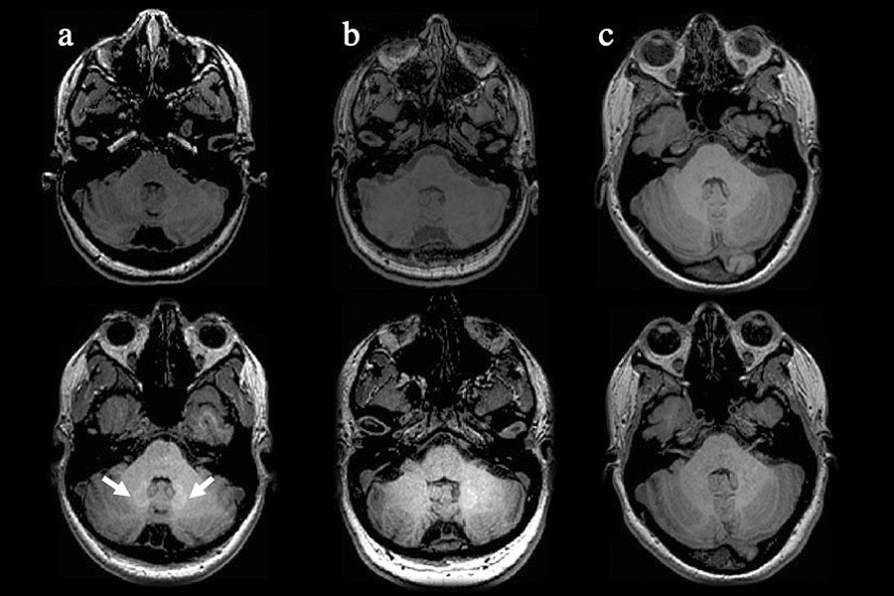
Study Addresses Use of GBCAs in Multiple Sclerosis Patients

With Another Phase III Trial, BNAC Solidifies Imaging Expertise
UB’s Buffalo Neuroimaging Analysis Center (BNAC) played a pivotal role in a phase III clinical trial of the first transcatheter cerebral embolic protection (TCEP) device to obtain marketing clearance by the Food and Drug Administration.